If you own, or are eyeing, a BMW i4, you’ve probably asked the big question: how fast will the BMW i4 battery degrade? Range is the soul of an electric car. Lose too much of it and road trips get longer, commutes get tighter, and resale value takes a hit. The good news: with the i4’s modern battery pack and a few smart habits, most drivers will see less degradation than they fear.
Short answer
How worried should you be about BMW i4 battery degradation?
Battery degradation is real, lithium‑ion cells slowly lose capacity every year, but the horror stories you may have heard usually come from older EVs with primitive packs and little to no thermal management. The BMW i4 rides on BMW’s Gen5 eDrive system with active liquid cooling, robust software limits, and a healthy buffer that the driver never sees. In plain English: the car is working quietly in the background to protect its own battery.
- Most i4 owners report only modest range loss in the first few years, often hard to distinguish from seasonal swings.
- BMW’s 8‑year / 100,000‑mile high‑voltage battery warranty (U.S.) guarantees at least 70% of usable capacity.
- Rapid degradation is almost always tied to abuse: letting the car sit at 100% for days, frequent deep discharges, or extreme heat without shade.
Don’t confuse weather with wear
BMW i4 battery basics: chemistry, pack sizes, and thermal management
To understand BMW i4 battery degradation, it helps to know what’s under the floor. BMW uses its fifth‑generation eDrive hardware, with a high‑voltage lithium‑ion pack using NMC (nickel‑manganese‑cobalt) chemistry. This is the same family of cells you’ll find in many premium EVs, known for good energy density and solid longevity when managed well.
BMW i4 battery variants at a glance
Different trims share similar technology but not identical packs
i4 eDrive35
Smaller‑capacity pack (around mid‑60s kWh usable) aimed at value and city driving. Same Gen5 tech, just fewer modules.
i4 eDrive40
RWD with a larger pack (around high‑70s kWh usable) and strong DC fast‑charge capability, up to roughly 180–205 kW depending on model year and market.
i4 M50 / xDrive40
Dual‑motor performance trims use similar pack tech with aggressive cooling and high continuous power draw, stressful in theory, but kept in check by careful thermal management.
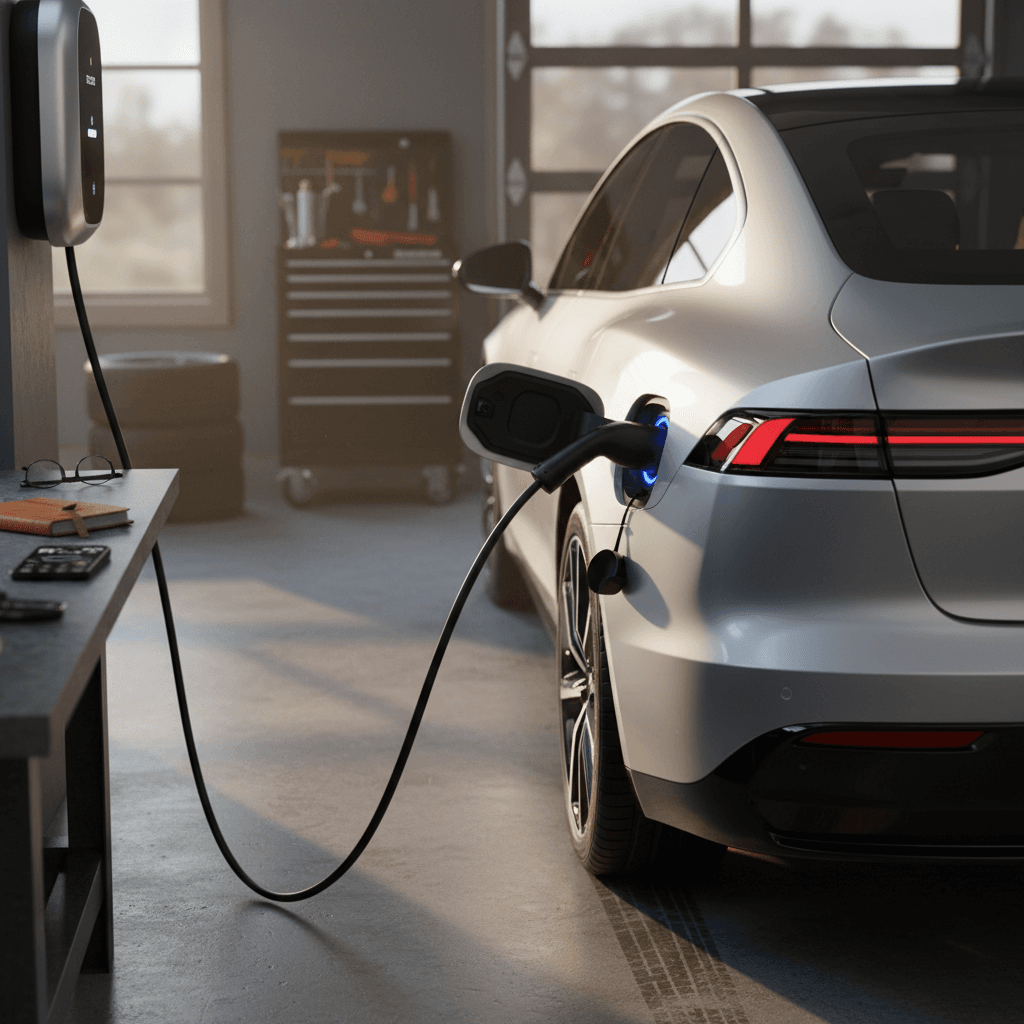
All versions of the i4 use liquid cooling and heating to keep the battery within its comfort zone. When you navigate to a DC fast charger in BMW’s built‑in navigation, the car can precondition the pack so it hits the charger at an ideal temperature, which both protects the cells and gives you quicker charges.
Let the car babysit itself
What we know so far about BMW i4 battery degradation
The i4 has only been on sale since the 2022 model year, so we don’t yet have 10‑year data. But we do have thousands of owner reports from high‑mileage cars, scan‑tool readings of state‑of‑health, and BMW’s own design targets. Put together, they paint a reassuring picture.
Early BMW i4 battery life trends
Owners who charge sensibly, avoiding long stretches parked at 100%, not living on DC fast chargers, and steering clear of frequent 0%–2% deep discharges, are seeing what you’d expect from a modern premium EV: slow, boring degradation. That’s exactly what you want.
Any speed the car is capable of is safe. You’re more likely to hurt the battery by leaving it full or empty for days than by actually using DC fast charging as intended.
BMW i4 battery warranty and what it really covers
In the U.S., all BMW i4 models come with a high‑voltage battery warranty of 8 years or 100,000 miles (whichever comes first). The headline detail most people miss: BMW promises that the pack will maintain at least 70% of its original usable capacity over that period, subject to the usual exclusions for abuse or damage.
BMW i4 high‑voltage battery warranty snapshot (U.S.)
Always verify details with BMW or your dealer for your specific model year, but this is the general outline.
| Item | Coverage |
|---|---|
| Term | 8 years / 100,000 miles |
| Capacity guarantee | Minimum 70% usable capacity |
| What’s covered | Defects in materials/workmanship of the high‑voltage battery |
| What’s not covered | Damage from accidents, misuse, improper modifications, or ignoring warnings |
| How it’s evaluated | Dealer diagnostic tests and BMW‑approved measurement methods |
BMW’s coverage is in line with other premium EV brands and is designed around an expected 30% maximum capacity loss over 8 years.
Warranty does not cover normal aging
Charging and driving habits that slow BMW i4 battery degradation
You can’t stop battery aging, but you can absolutely steer it. The same chemistry rules apply whether you’re in a BMW i4, a Tesla, or a Hyundai: batteries hate extremes. Extreme state of charge, extreme temperature, and extreme cycle depth are the enemies. The i4’s software shields you from a lot of this, but your habits fill in the rest.
Daily habits that protect your BMW i4 battery
1. Aim for 20–80% in daily use
For routine commuting, try to live mostly between about 20% and 80% state of charge. Set your charge limit to 80–90% for overnight charging, and only go to 100% when you actually need the full range the next morning.
2. Don’t let it sit full or empty
Charging to 100% for a road trip is fine. Charging to 100% on Friday and letting the car sit all weekend is not. Likewise, avoid leaving the pack below ~5–10% for days at a time.
3. Prefer Level 2 for routine charging
Regular AC Level 2 charging at home or work is gentler on the battery than constant DC fast charging. It adds range at a slower, cooler pace, perfect for overnight top‑ups.
4. Use preconditioning before fast charging
In very hot or cold weather, let the car warm or cool the pack first. Route to the charger in BMW’s nav or manually enable battery preconditioning 15–30 minutes before you plug into DC fast charging.
5. Respect temperature extremes
If your i4’s battery is showing very high or very low temperature, give it a break. Avoid back‑to‑back DC fast charges in brutal heat, and don’t hammer the accelerator until the pack has warmed up on frigid mornings.
6. Keep software up to date
Battery management logic keeps evolving. Let your dealer apply relevant updates, and install over‑the‑air updates as BMW releases them, they often contain tweaks that improve long‑term battery care.
Good news for high‑milers
Is fast charging bad for the BMW i4 battery?
DC fast charging is like espresso: great in moderation, unpleasant if you live on it. For the BMW i4, occasional or even regular fast charging on road trips is part of the design brief. The pack is engineered to accept up to roughly 180–205 kW at low state of charge, then taper as the battery fills. What really matters is how often you do it and what state of charge and temperature you’re at when you plug in.
When DC fast charging is perfectly fine
- Road trips: Topping from ~10–20% to ~70–80% several times a day.
- Occasional convenience: A quick hit when you’re short on time and far from home.
- Preconditioned pack: You used BMW nav or manual preconditioning so the battery is at a happy temperature.
In these scenarios, the car carefully controls current and temperature. You may lose a tiny bit more capacity over many years than a driver who almost never fast‑charges, but it’s usually not dramatic.
When fast charging can accelerate wear
- “Living” on DCFC: Relying on DC fast charging several times a week as your primary energy source.
- Always to 100%: Frequently charging from low state of charge all the way to full at high power, then letting the car sit.
- Brutal heat without shade: Repeated back‑to‑back DC sessions in 100°F+ sun with the pack already hot.
The i4 will still protect itself, but you’re nudging the chemistry harder than needed. Over 5–10 years, that can mean a bit more capacity loss.
Think of DC fast charging as a tool, not a lifestyle
Weather, storage, and how climate affects your i4 battery
Temperature swings can make any EV owner think their battery is dying. In reality, a big chunk of your winter “range loss” is temporary, internal resistance rises when it’s cold, so the car estimates fewer miles, and energy goes into heating the cabin and pack. When spring arrives, much of that range “mysteriously” returns.
- In cold climates, expect noticeably lower range until the pack and cabin warm up.
- In very hot climates, the car’s cooling system will work hard to protect the pack, sometimes limiting charge speeds.
- Long‑term, EVs that live in extreme heat tend to degrade a bit faster than those in mild coastal climates.
Smart storage for better battery health
How to check BMW i4 battery health (and what’s “normal”)
If you’re curious, or you’re evaluating a used i4, there are a few ways to get a sense of battery health. None are perfect on their own, but together they paint a good picture.
Ways to gauge BMW i4 battery health
From simple driveway tests to professional diagnostics
1. Observe real‑world range
Reset a trip and drive from, say, 80% down to 20% at your normal mix of roads. Compare miles driven to the car’s original EPA range, then factor in weather and driving style. A 5–10% gap on a several‑year‑old car is usually normal.
2. Use scan tools or apps
Some third‑party OBD tools and apps can read out estimated state‑of‑health (SoH). Treat this as a data point, not gospel, different tools can disagree, and software updates can change reported numbers.
3. Get a professional report
A dealer or EV‑specialist shop can often pull more detailed diagnostics. At Recharged, every car gets a Recharged Score report, which includes independent battery health insights so you’re not guessing.
Don’t obsess over one number
Buying a used BMW i4: battery red flags and green lights
Battery health is the single biggest unknown when you shop for a used EV. With a BMW i4, you want to know not just how many miles are on the odometer, but how those miles were piled on and how the previous owner treated the pack.
Used BMW i4 battery checklist
1. Confirm remaining warranty
Check the in‑service date to see how much of the 8‑year / 100,000‑mile battery warranty is left. A 3‑year‑old i4 with five years of coverage remaining is a very different risk profile than a 7‑year‑old car right at the edge.
2. Ask about charging habits
Did the owner mostly charge at home on Level 2, or live on DC fast chargers? Occasional road‑trip fast charging is fine; daily DC charging with lots of 0–100% cycles is harder on the pack.
3. Look for extreme use patterns
Taxi and ride‑hail duty, desert climate with little shade, or track‑day abuse can all add stress, even with good thermal management. High miles alone aren’t scary; it’s <em>how</em> those miles were driven and charged.
4. Check range against original specs
On a test drive, compare the displayed range at a given state of charge to the car’s original EPA rating. A modest shortfall is normal; a huge gap may warrant deeper investigation.
5. Get an independent health report
This is where platforms like <strong>Recharged</strong> earn their keep. Every vehicle listed includes a <strong>Recharged Score Report</strong> with verified battery health diagnostics, so you see how the pack is aging before you commit.
6. Inspect charging behavior
On a Level 2 charger, does the car start and stay charging normally? On a DC fast charger, does it ramp up, then taper around 50–70%? Weird cut‑offs or error messages deserve a closer look.
When you buy through Recharged, that detective work is baked in. Our EV‑specialist team uses battery diagnostics and real usage data to produce the Recharged Score, so you’re not taking the seller’s word, or a single app screenshot, as truth.
BMW i4 battery degradation: FAQ
Frequently asked questions about BMW i4 battery degradation
Bottom line: what to expect over 8–10 years
The BMW i4’s battery pack is not a fragile crystal chandelier; it’s an engineered workhorse that expects to be fast‑charged, road‑tripped, and driven hard now and then. If you keep it away from the worst abuses, chronic 0–100% swings, baking in extreme heat at full charge, ignoring preconditioning in brutal weather, you’re likely to see slow, manageable battery degradation over an 8–10‑year span.
For current owners, that means you can stop doomscrolling and start enjoying the car. For used‑i4 shoppers, it means battery health should be a central part of your shopping process, not a mystery lurking in the background. That’s why every EV on Recharged includes a Recharged Score Report with verified battery diagnostics, fair market pricing, and EV‑specialist support from first look to final delivery.
Treat the BMW i4 battery with a bit of respect, and it will quietly repay you in stable range, strong performance, and better resale value, exactly what you want when you’re betting on a used electric car to carry you years into the future.