If you’re considering a BMW iX, or already driving one, the question on your mind is simple: **how much will the BMW iX battery degrade over time, and what does that do to my range and resale value?** This guide walks through what’s inside the iX battery pack, what owners are actually seeing after a few years, how BMW’s warranty works, and what you can do to keep your battery, and your range, in top shape.
Short answer
BMW iX battery basics: size, chemistry and warranty
Pack sizes and usable energy
The BMW iX uses BMW’s fifth‑generation eDrive battery technology. Depending on trim, you’ll see different usable capacities:
- iX xDrive40: ~71 kWh usable (about 76.6 kWh gross)
- iX xDrive50: ~100 kWh usable
- iX xDrive60 / M60: about 112–113 kWh usable
BMW purposely keeps a buffer at the top and bottom of the pack so the battery never truly charges to 0% or 100% internally. That buffer is one of the reasons modern EVs, including the iX, are aging better than early electric cars.
Chemistry and architecture
The iX pack uses a high‑energy‑density NMC (nickel‑manganese‑cobalt) lithium‑ion chemistry on a ~400V architecture. NMC is the same class of chemistry used in most long‑range premium EVs because it offers strong energy density and good durability when the battery management system (BMS) is tuned correctly.
The BMW BMS constantly monitors cell voltages and temperatures, balances cells, and controls how fast the car will charge or discharge. All of that directly influences long‑term degradation.
BMW iX high‑voltage battery warranty at a glance
These are typical North American warranty terms for the BMW iX high‑voltage battery. Always confirm the exact language for your model year and state.
| Item | Coverage |
|---|---|
| Warranty duration | 8 years from in‑service date |
| Mileage limit | 100,000 miles (whichever comes first) |
| What’s covered | Defects in materials or workmanship in the high‑voltage battery |
| Capacity guarantee | BMW typically considers the battery defective if usable capacity falls below about 70% of original within the warranty period |
| What’s not covered | Normal capacity loss, abuse, improper modifications, damage from external events |
The capacity percentage is the key number when you’re evaluating long‑term ownership or a used BMW iX purchase.
Warranty fine print matters
How fast does a BMW iX battery degrade in the real world?
Real‑world data is still accumulating, but early BMW iX owners, many with 2–3 years and tens of thousands of miles, are painting a fairly consistent picture. When you filter out winter range swings and driving‑style differences, the **typical iX pack is aging slowly and predictably**, especially in moderate climates.
Early BMW iX battery health in the wild
It’s important not to confuse **battery degradation** with **range estimates on the dash**. The iX adjusts its projected range based on your recent driving and conditions. A week of fast highway runs or winter temperatures can make it look like you “lost” range, even if the battery’s actual capacity hasn’t changed at all.
Look at capacity, not just miles
What the BMW iX battery warranty really covers
How BMW measures degradation
BMW doesn’t expose a simple percentage slider on the iX’s dash. Instead, they use internal diagnostics that look at:
- Measured usable energy content (kWh)
- Cell balance and internal resistance
- Charge/discharge history and temperature data
Dealers can run a **high‑voltage battery test** that takes several hours. In many markets, if that test shows more than about 30% capacity loss (i.e., pack has dropped below ~70% of original usable capacity), it can trigger a warranty claim.
Accessing official battery data
Owners have a few ways to see more than what’s on the main gauge cluster:
- Ask a BMW dealer to run and print a battery test during service
- Request a BMW CarData report through your BMW account, which often lists usable energy content
- Use reputable third‑party apps and an OBD dongle that read BMS values directly
The key is to get a number you can compare to new‑pack usable capacity for your trim (for example, around 71 kWh for an iX xDrive40).
Expect limited detail from some dealers
Habits that speed up BMW iX battery degradation
Top behaviors that accelerate iX battery wear
Most packs don’t just "wear out", they respond to how they’re treated.
Frequent 100% charging
Regularly charging to 100% and letting the car sit full, especially in heat, keeps the chemistry in its most stressful state. Occasional 100% charges for road trips are fine; making 100% your daily habit is not.
High heat exposure
Parking outside in hot sun, rapid DC fast‑charging on already hot days, or living in a desert climate all increase calendar aging. The thermal system helps, but heat is still battery enemy number one.
Heavy DC fast‑charging
DC fast‑charging is safe, but relying on it for most charging, especially from very low state‑of‑charge to very high, adds extra stress compared to slower AC charging at home.
High sustained speeds
Sustained high‑speed driving doesn’t directly damage the battery, but it means high power draw and more heat. Over time, that extra thermal load can nudge degradation higher if cooling is constantly working overtime.
Deep cycles to near 0%
Frequently running the pack down to very low state‑of‑charge before recharging isn’t ideal. The BMS protects the cells, but repeated deep cycles still count as harder use.
Extreme cold plus fast‑charge
Charging a cold battery hard is never a great idea. The iX uses preconditioning, but if you repeatedly DC fast‑charge a stone‑cold pack, you’re adding unnecessary stress.
Don’t panic about the occasional fast charge
How to slow BMW iX battery degradation and protect range
Six habits that keep your iX battery happy
1. Live in the middle of the pack
For daily use, keep the battery mostly between **20% and 80%**, and set your charge target accordingly. Use 90–100% only when you need the range and plan to drive soon after.
2. Prioritize AC home charging
Whenever possible, charge with Level 2 AC at home or work. It’s gentler on the pack than repeated DC fast‑charging and usually cheaper per kWh.
3. Avoid letting the car sit full or empty
Try not to park for long stretches at very high (near 100%) or very low (near 0%) charge. If you’re parking for a week at the airport, aim for around 40–60% if you can.
4. Use preconditioning for fast charging
When you navigate to a DC fast‑charger in the BMW nav, the car can precondition the pack to the right temperature. That reduces stress and improves charge speeds.
5. Be kinder in extreme temps
In very hot or very cold weather, give the iX a few minutes of gentle driving before demanding maximum power. Avoid repeated full‑throttle launches or back‑to‑back DC sessions on scorching days.
6. Keep software and cooling healthy
Let the car finish its thermal management after driving, and keep up with software and service bulletins. BMW may adjust charging profiles over time to further protect longevity.
How to check BMW iX battery health when buying used
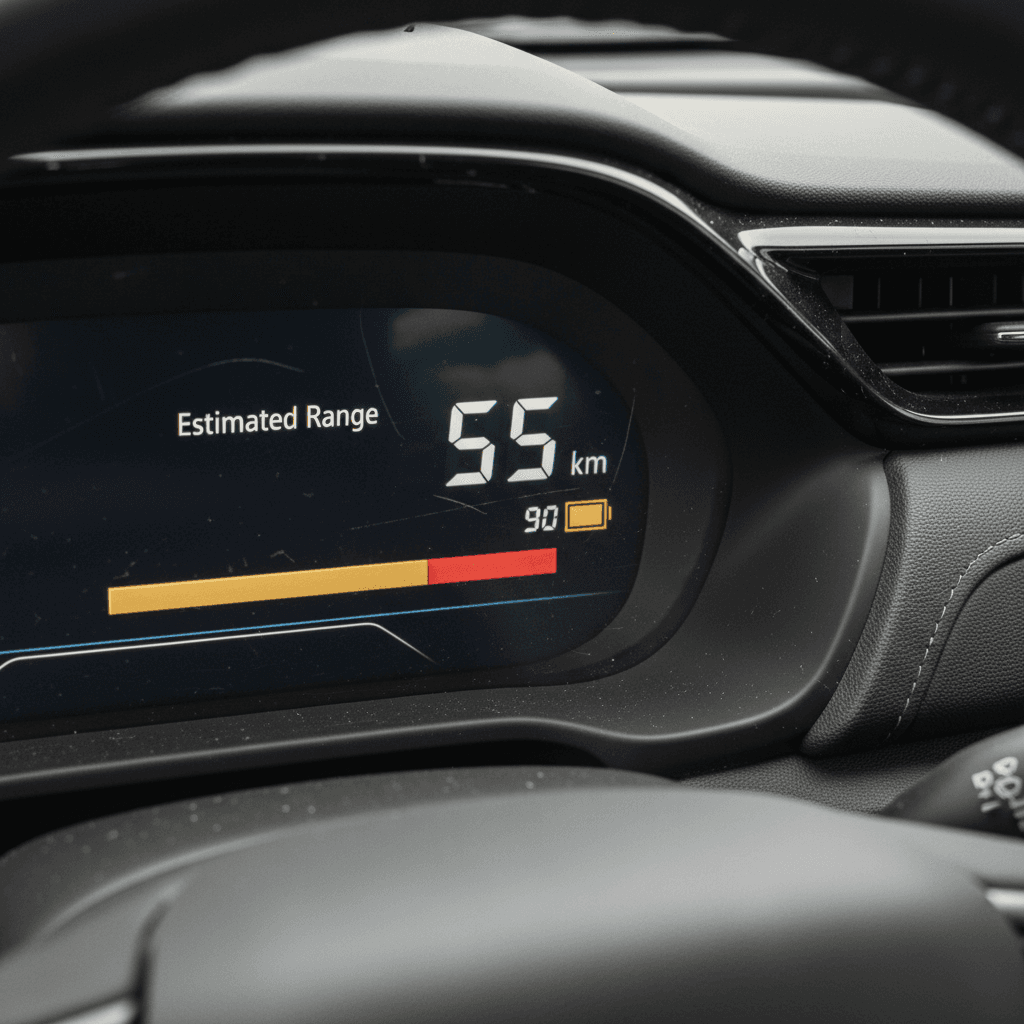
If you’re shopping for a used BMW iX, understanding battery health is just as important as checking tires or brakes. A pack that’s still at 93–97% of its original capacity is normal. A pack that’s already near the warranty floor is a red flag and should be priced accordingly, or skipped altogether.
Smart battery checks for a used BMW iX
Treat the battery like the engine in a gasoline car, verify its health before you buy.
Ask for a dealer battery test or CarData report
Request a recent high‑voltage battery test from a BMW dealer, or a CarData report showing usable energy content. Compare that figure to the new‑pack usable capacity for that trim to estimate degradation.
Compare real range to spec, carefully
On a full charge in mild weather, take the iX for a mixed‑driving route and note efficiency (mi/kWh) and how the state‑of‑charge drops. One short drive won’t give precision, but obvious mismatches (for example, very low range at mild speeds) warrant deeper investigation.
Review charging history if available
Some sellers or fleet vehicles may have logs of DC fast‑charging vs. AC home charging. A car that lived almost entirely on ultra‑fast chargers in desert heat is likely to have aged faster than one charged mostly at home.
Use third‑party testing & reports
Platforms like Recharged include a Recharged Score battery health report based on verified diagnostics, not guesswork. That gives you an objective view of how the pack compares to similar vehicles.
How Recharged helps
Ready to find your next EV?
Browse VehiclesWhat typical degradation means for real‑world range
Numbers like “5% degradation” are abstract until you translate them into how far you can actually drive. The good news is that, on a large‑pack SUV like the BMW iX, the first few percent of capacity loss usually make **less difference than your driving style, wheel choice, or the weather.**
Example: how capacity loss affects estimated range
Illustrative ranges assuming EPA‑style efficiency in mild weather. Real‑world results will vary with speed, climate, wheels and driving style.
| Model | New usable capacity | Approx. new‑car highway range | At ~5% loss | At ~10% loss |
|---|---|---|---|---|
| BMW iX xDrive40 | ~71 kWh | ~190–200 miles | ~180–190 miles | ~170–180 miles |
| BMW iX xDrive50 | ~100 kWh | ~280–300 miles | ~265–285 miles | ~250–270 miles |
| BMW iX xDrive60 / M60 | ~112 kWh | ~300–320 miles | ~285–305 miles | ~270–290 miles |
Early‑life degradation tends to trim your theoretical maximum range, but daily usability often feels unchanged.
Driving habits still dominate
BMW iX battery degradation FAQ
Frequently asked questions about BMW iX battery degradation
Key takeaways for current and future iX owners
The BMW iX’s large NMC battery pack, sophisticated thermal management and conservative usable‑capacity buffers are combining to deliver **very respectable long‑term durability** so far. Early owner data suggests that if you mostly charge at home, avoid chronic 100% top‑offs and don’t live in extreme heat, you’re likely to see modest, predictable degradation, well above BMW’s 70% warranty floor for many years.
If you’re **shopping used**, don’t guess. Ask for real battery data, look for evidence of how the iX was charged and driven, and lean on objective tools like the Recharged Score to compare vehicles. With the right information, you can confidently choose a BMW iX that still has the battery health, range and value to match your needs today, and years down the road.