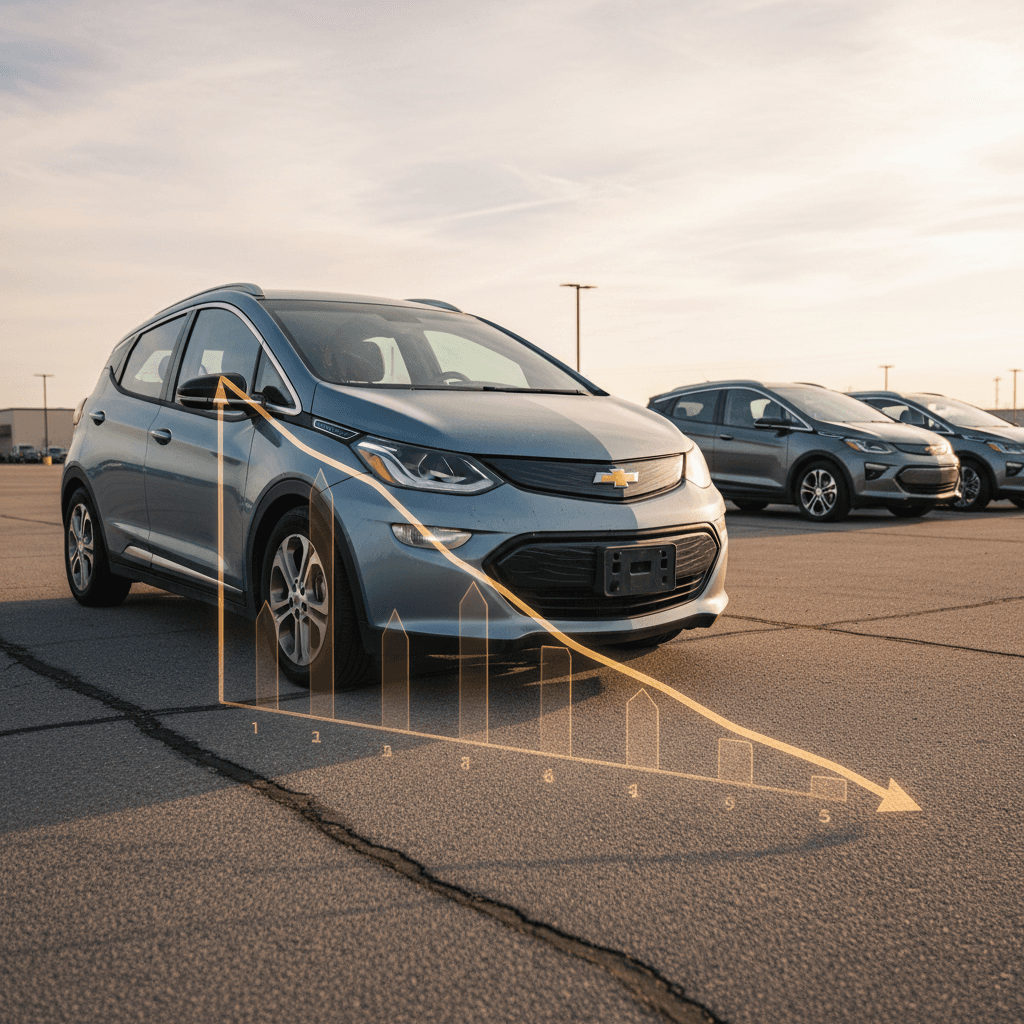
If you’re considering a used Chevrolet Bolt EV or wondering what your current Bolt will be worth in a few years, you’re really asking one thing: what does the Chevrolet Bolt EV depreciation curve over 5 years look like? Because EV technology, incentives, and charging infrastructure are all moving targets, the Bolt’s value story doesn’t look like a typical compact hatchback.
Context: Numbers, not guarantees
Why Chevrolet Bolt EV depreciation matters over 5 years
Depreciation is simply how much of a car’s value disappears as you own and drive it. For a Chevrolet Bolt EV, that curve over five years determines three things that matter to you: total cost of ownership, how much equity you’ll have if you finance it, and how easy it will be to sell or trade when you’re ready for something new.
- If you’re buying used, understanding depreciation tells you whether you’re getting in near the bottom of the curve or still paying a “new tech” premium.
- If you’re a current owner, it shows whether it’s smarter to keep the car longer, trade at year three, or exit earlier.
- If you’re cross‑shopping EVs, it’s a way to compare long‑term costs even when sticker prices and tax incentives look similar.
EV twist vs gas cars
Quick view: 5‑year Chevrolet Bolt EV depreciation curve
Let’s start with a simplified, hypothetical 5‑year depreciation curve for a Chevrolet Bolt EV purchased new at a $32,000 out‑the‑door price. This is a round number that sits in the middle of typical transaction prices for well‑equipped Bolts and Bolt EUVs in recent model years.
Illustrative 5‑year depreciation curve: Chevrolet Bolt EV
Approximate retained value for a new Chevrolet Bolt EV originally priced at $32,000 (before incentives). Real‑world values vary by mileage, battery health, equipment, and market conditions.
| Vehicle age | Odometer (typical) | Approx. resale value | Share of original price | Approx. depreciation to date |
|---|---|---|---|---|
| Year 1 | 12,000 mi | $24,000 | 75% | -$8,000 |
| Year 2 | 24,000 mi | $20,500 | 64% | -$11,500 |
| Year 3 | 36,000 mi | $17,500 | 55% | -$14,500 |
| Year 4 | 48,000 mi | $15,000 | 47% | -$17,000 |
| Year 5 | 60,000 mi | $13,000 | 41% | -$19,000 |
The curve is steeper in the first three years, then flattens as the car’s battery and feature set prove themselves.
Incentives change the math
Chevrolet Bolt EV value snapshot at 5 years (typical)
How the Bolt EV’s depreciation compares to gas cars and other EVs
Versus gasoline compacts
Compared with a similarly priced gas compact (think Cruze, Civic, Corolla), a Chevrolet Bolt EV used to depreciate faster when EVs were still a niche. As public charging has improved and used‑EV buyers have become more confident, that gap has narrowed dramatically.
- Operating cost savings (electricity vs gas, fewer maintenance items) are now priced in by used‑car shoppers.
- In many markets, a clean, low‑mileage Bolt commands similar or better resale than an equivalent gas hatchback.
Versus other EVs
Against other mainstream EVs, the Bolt usually sits in the middle of the pack on depreciation.
- Better than early short‑range EVs and compliance cars with small batteries and limited fast‑charging.
- Similar to many Hyundai, Kia, and Nissan EVs with comparable range and charging performance.
- Below top‑tier Tesla models, which often retain value better thanks to charging network access and strong brand pull.
Why “middle of the pack” can be great
Key factors shaping Chevrolet Bolt EV resale value
What moves the Bolt EV depreciation curve up or down
Beyond age and mileage, these are the levers that really matter.
Battery health & range
The Bolt’s pack size and real‑world range are core to its appeal. A car that still delivers strong range on a single charge will sit above the average depreciation curve; one with obvious degradation will sit below it.
Charging capability & use case
DC fast‑charging capability, local charging infrastructure, and how well the car fits commuters in your region all show up in resale. Urban buyers often value the Bolt more than rural buyers who road‑trip often.
Recall status & repair history
The Bolt’s high‑profile battery recall is a double‑edged sword. A car that has been fully remedied and documented can be a safer bet, and more valuable, than one with ambiguous history.
Regional demand
Markets with high fuel prices, EV incentives, or robust charging networks usually support stronger Bolt EV resale values than regions where EV adoption is still early.
Trim, features & driver‑assist
Options like DC fast charging, Driver Confidence Packages, and later‑model infotainment matter more in EVs than in many gas cars. A bare‑bones early Bolt often trails better‑equipped siblings on the curve.
Incentives & macro market
Used EV values are sensitive to gas prices, interest rates, and new‑EV incentives. A wave of aggressive new‑EV discounts can temporarily pull used values down even if the underlying vehicle is solid.
Battery health, recalls, and value on the Bolt EV
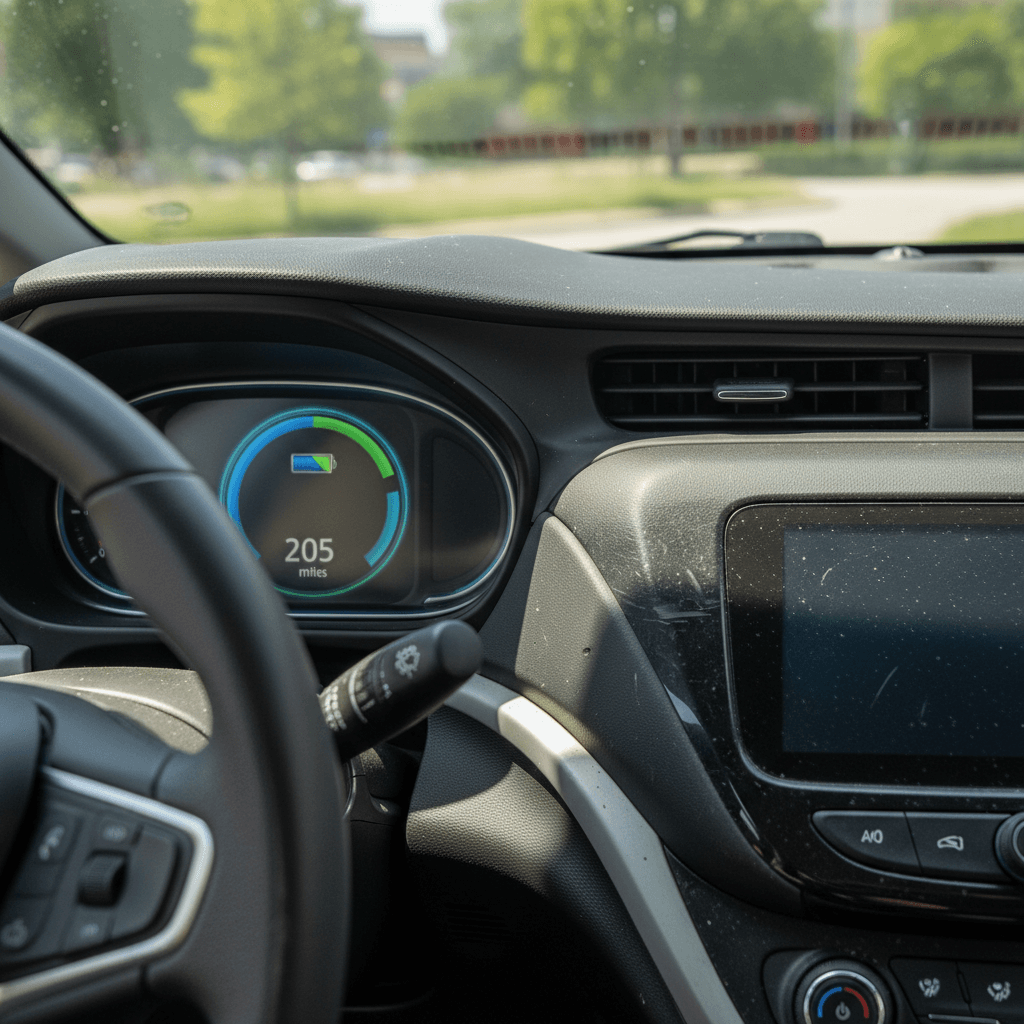
For any EV, the depreciation curve is really a proxy for market confidence in the battery. The Chevrolet Bolt EV is no exception, and its widely covered battery recall only makes that more obvious. A Bolt with a strong pack and clean documentation can command thousands more than an otherwise similar car with unresolved battery questions.
Battery‑related signals that support stronger resale
Documented recall completion
A Bolt EV that has had the official battery recall work completed, and can prove it with service records, usually commands better pricing and sells faster.
Healthy range for age and climate
If a 5‑year‑old Bolt still delivers real‑world range close to its original EPA estimate in your typical conditions, the market will reward it.
No history of high‑voltage faults
Service records free of repeated HV system errors, inverter issues, or on‑road shutdown incidents are a quiet but powerful value signal.
Consistent charging habits
Cars that mostly Level 2 charge at home and avoid extreme DC fast‑charging abuse tend to show better long‑term battery health.
Independent battery health report
Tools like the <strong>Recharged Score</strong> battery diagnostics convert raw pack data into an easy‑to‑understand health grade buyers can trust.
Where Recharged fits in
Ready to find your next EV?
Browse VehiclesModel years, trims, and how they age over 5 years
Not every Bolt follows the exact same 5‑year depreciation curve. Range improvements, feature changes, and the addition of the slightly larger Bolt EUV all create small but meaningful differences in how value holds up by model year.
Bolt EV and Bolt EUV value signals by model era
Broad patterns in how different Bolt generations tend to age over their first 5 years.
| Model era (example) | Typical 5‑year position vs average Bolt | Why it’s above or below curve |
|---|---|---|
| Early Bolt EV (2017–2019) | Slightly below | Shorter range than later cars, older infotainment, and early recall concerns can weigh on value unless battery health is stellar. |
| Mid‑cycle Bolt EV (2020–2021) | Around average | More mature software and equipment; values largely track the generic Bolt curve when battery health is good. |
| Refresh Bolt EV (2022–2023) | Slightly above | Updated styling, interior upgrades, and improved value perception help these cars retain a bit more over five years. |
| Bolt EUV (2022–2023) | Slightly above | More interior space and available Super Cruise (where equipped) make EUVs attractive used, often tracking a firmer curve. |
Later software, more range, and improved driver‑assist tech typically help late‑model Bolts hug a stronger depreciation curve.
Trim levels and options to watch
How to read a Chevrolet Bolt EV price listing like an analyst
When you scroll through Bolt EV listings, it’s easy to get lost in a sea of monthly payments and dealer copy. Underneath all of that, every listing is just a point on the depreciation curve, higher, lower, or right around where you’d expect for that age and mileage.
Three quick checks to place a Bolt EV on the curve
Spend 60 seconds with a listing before you call or click.
1. Normalize for mileage
Compare the car’s mileage to a 12,000‑mi‑per‑year baseline. A 5‑year‑old Bolt with 40,000 miles is effectively “younger” than one with 75,000, and should sit higher on the curve.
2. Adjust for battery health
If you have access to a battery health report (like a Recharged Score) or credible range data, mentally move the price up or down. Strong pack health justifies a higher position.
3. Factor in history & options
Check for complete recall documentation, DC fast‑charge capability, and key comfort/driver‑assist features. These move the car up or down relative to the average for its year.
Don’t anchor on a single outlier
Tips for buyers: Getting a fair deal on a used Bolt EV
If you’re shopping for a used Chevrolet Bolt EV in 2025, you’re in a market where depreciation has already done a lot of the heavy lifting, but where battery confidence, charging access, and incentives still move prices around. Here’s how to tilt that in your favor.
Buyer checklist: Using the 5‑year curve to your advantage
Target the “value valley”
For many Bolts, years 3–5 are where the depreciation curve flattens and value for money peaks. You’re often buying most of the car’s usable life at a substantial discount to new.
Prioritize verified battery health
A slightly higher asking price for a car with an independently verified strong pack is often cheaper in the long run than a bargain Bolt with unknown battery condition.
Check total cost, not just price
Factor in electricity vs gas savings, expected maintenance, insurance, and any remaining warranty coverage. A Bolt with a slightly higher sticker can win handily on 5‑year total cost.
Lean on transparent marketplaces
Buying through a platform like <strong>Recharged</strong>, where every EV includes a battery health report, fair market pricing insights, and nationwide delivery options, reduces the guesswork that leads to overpaying.
Use the curve in negotiations
If a seller’s asking price for a 5‑year‑old Bolt sits well above typical 5‑year retained value for similar cars, use that data to negotiate back toward the realistic curve.
Tips for owners: Maximizing your Bolt EV’s resale or trade‑in value
If you already own a Bolt EV, your goal is to sit on the upper edge of the depreciation curve when it’s time to sell or trade. You can’t change your model year, but you can influence how the market sees your specific car.
Five levers that keep your Bolt EV on the high side of the curve
Simple ownership habits that turn into real dollars later.
Keep it cosmetically honest
EV buyers tend to be detail‑oriented. Fix obvious cosmetic issues, keep the interior clean, and document any paintwork. A tidy Bolt signals careful ownership and supports better offers.
Save every EV‑related invoice
Keep records of recall work, software updates, tire replacements, and any HV system diagnostics. A thick folder, or a clean digital log, helps appraisers and private buyers justify top‑of‑market pricing.
Adopt battery‑friendly habits
Moderate your use of DC fast charging, avoid parking at 100% for days, and don’t let the pack sit near empty in extreme heat or cold. Over 5 years, that can translate into a healthier pack and stronger resale.
Time your exit smartly
Get multiple value opinions
Compare instant offers, dealer trade‑ins, and consignment or marketplace options. Recharged, for example, can provide an instant offer or help list your Bolt to reach EV‑focused buyers nationwide.
What hurts value the most
FAQ: Chevrolet Bolt EV depreciation and resale
Frequently asked questions about 5‑year Bolt EV depreciation
Bottom line: What to expect from a 5‑year Bolt EV
When you zoom out, the Chevrolet Bolt EV depreciation curve over 5 years looks less like the horror stories that surrounded early short‑range EVs and more like a practical, data‑driven path into affordable electric ownership. The steepest drop happens, like any car, in the first couple of years. By years three to five, the curve flattens, and the real differentiator is no longer the model badge but the health of the battery, the clarity of the vehicle’s history, and how well it fits your life.
If you’re buying, that means a good 3‑ to 5‑year‑old Bolt EV can deliver most of the experience of a new one at a fraction of the price, especially when you factor in fuel and maintenance savings. If you’re selling, it means you can still command strong money for a well‑documented, well‑cared‑for car, particularly if you take the time to surface its battery health story for shoppers.
Either way, you don’t have to guess. A transparent marketplace like Recharged, with expert EV support, Recharged Score battery diagnostics on every vehicle, fair market pricing, financing, trade‑in options, and nationwide delivery, turns the abstract idea of depreciation into a concrete, confident decision. And that’s ultimately what a good 5‑year depreciation curve is for: helping you decide when an EV like the Bolt is the right move, on numbers that truly add up.