If you’re eyeing a Hyundai IONIQ 5, especially a used one, your mind goes straight to the battery. How fast does the **Hyundai IONIQ 5 battery degrade**? Will that big 77–84 kWh pack still deliver its promised range in 5, 8, or even 10 years? The short version: real‑world data so far is remarkably good, but how you charge and drive still matters.
Key takeaway
Hyundai IONIQ 5 battery degradation at a glance
Real‑world IONIQ 5 battery degradation snapshots
Put bluntly, the IONIQ 5’s battery is **aging better than many skeptics expected**. Owner‑logged data using OBD dongles and long‑term case studies from Hyundai itself point to slow, predictable degradation, provided you’re not abusing the pack with constant 100% charges in desert heat.
How much Hyundai IONIQ 5 battery degradation is normal?
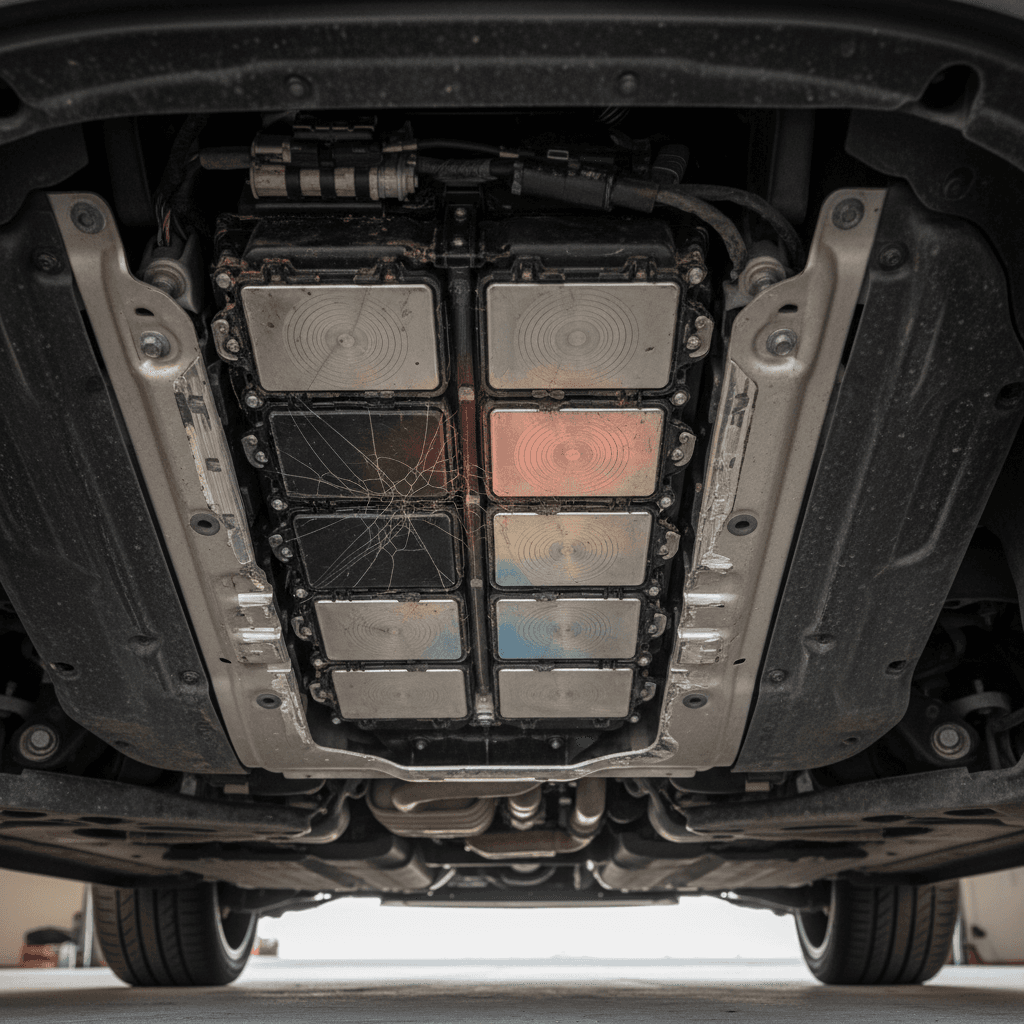
No two batteries age exactly alike, but patterns are emerging for the Hyundai IONIQ 5. When you look across owner reports and the high‑mileage Hyundai test car, a reasonable expectation looks like this:
Typical Hyundai IONIQ 5 battery degradation over time
Approximate capacity loss ranges assuming normal use, mixed Level 2 and DC fast charging, not left at 100% in extreme heat for long periods.
| Vehicle age / mileage | Typical capacity loss | What that feels like in range |
|---|---|---|
| 1–2 years / ≤25,000 miles | 1–3% | You’ll rarely notice it. EPA‑rated range vs. real‑world use will still be dominated by weather and driving style. |
| 3–4 years / 40,000–60,000 miles | 2–6% | A few less miles at the top end of the gauge; most drivers still see nearly "as‑new" highway legs. |
| 5–8 years / 80,000–120,000 miles | 5–12% | You may drop one "charging stop" on very long routes vs. day‑one, but daily commuting is largely unaffected. |
| 10+ years / high mileage | 10–20%+ | Heavier degradation becomes more obvious; still usable, but range planning matters more, especially in winter. |
These are broad ranges, not guarantees. Individual packs can sit above or below these lines depending on climate, charging habits, and mileage.
Outliers exist
The head‑turning data point is Hyundai’s own high‑mileage test mule: an IONIQ 5 in Korea driven roughly **580,000 km (~360,000 miles) in under three years**, often using rapid DC fast charging. When Hyundai pulled the pack for analysis, it still showed **about 87.7% state of health**, which implies roughly **12–13% degradation** over a truly brutal duty cycle.
More ordinary owners, roughly 40,000–70,000 km (25,000–45,000 miles), mixed charging, are seeing on the order of **2–4% loss** by year three, occasionally a bit more if the car lives in a hot climate or spends a lot of time on high‑power DC chargers.
What actually causes IONIQ 5 battery degradation?
Hyundai’s chemistry isn’t magic. The IONIQ 5 uses high‑energy nickel‑rich lithium‑ion cells (variations of NCM/NCA depending on plant and pack). These share the same basic enemies as every modern EV battery:
- Time and calendar aging – Even if you don’t pile on miles, the pack slowly oxidizes internally. Heat accelerates it; mild climates are kinder.
- High state of charge – Parking at 100% for days is tougher on the cells than cruising around at 40–70%.
- High temperature – A hot battery ages faster. Fast charging in summer, then letting the car bake in the sun at 100%, is a triple‑whammy.
- Deep discharges – Frequently running the pack near 0% state of charge adds stress, especially if followed by hard driving or high‑power charging.
- High C‑rates (fast charging) – 150–350 kW DC charging heats the pack and stresses the electrodes, especially when used back‑to‑back on road trips.
Don’t obsess over every percent
Why the IONIQ 5’s battery tech holds up so well
If the IONIQ 5’s degradation numbers look almost too good, a lot of that comes down to the **E‑GMP platform** and the quiet diligence of Hyundai’s battery engineers.
Four design choices that protect the IONIQ 5 battery
You don’t see them, but you benefit from them every time you plug in.
800‑volt architecture
Liquid thermal management
Software buffers at the top and bottom
Conservative fast‑charge curves
Good news for used‑EV shoppers
Warranty coverage and when to worry about your battery
Hyundai was early to the long‑warranty game with hybrids, and it has carried that over to EVs. In the U.S., IONIQ 5 buyers get a **10‑year / 100,000‑mile high‑voltage battery warranty** (from original in‑service date). It’s meant to reassure you that you won’t be stuck with a useless pack halfway through the car’s life.
- Hyundai’s U.S. EV battery warranty typically applies to **capacity loss below about 70%** state of health within 10 years or 100,000 miles, whichever comes first.
- The warranty is usually **transferable** to subsequent owners, critical if you’re buying used.
- Damage from misuse, like physical damage, unauthorized modifications, or repeated overheating, may be excluded, but straightforward degradation from normal use is covered.
When to start asking questions
If you’re shopping used, you want to know not just "Does it still drive fine?" but also "How much buffer do I have before 70%?" That’s where **independent diagnostics** matter. Every EV sold through Recharged includes a **Recharged Score battery health report**, which verifies usable capacity and fast‑charge behavior, so you’re not buying blind.
Simple habits to slow IONIQ 5 battery degradation
You don’t need to live like a battery monk, but a handful of habits can materially slow **Hyundai IONIQ 5 battery degradation** over the long run, especially in hot or cold climates.
Everyday habits that help your IONIQ 5 battery age gracefully
1. Use 50–80% as your home base
For daily commuting, set your charge limit around 70–80% and avoid letting the car sit at 100% overnight. If your routine only uses a third of the pack each day, you’re already in the sweet spot.
2. Save 100% charges for road trips
Charging to full occasionally is fine, use it for long drives or once‑in‑a‑while cell balancing. Just don’t plug in every night and leave it at 100% until morning unless you truly need that range.
3. Don’t regularly run it near 0%
It’s okay to see single digits once in a while, but treating 5% as your "normal" arrival SoC isn’t kind to the pack. Try to arrive home in the 15–30% range most days.
4. Avoid heat‑soak at high charge
Parking a fully charged IONIQ 5 in full sun on a 100°F afternoon bakes the cells. If possible, park in shade or a garage when it’s hot, especially if the battery is above ~80%.
5. Prefer Level 2 for daily charging
DC fast charging is an amazing tool, not a lifestyle. For routine use, a 240V Level 2 charger at home or work is gentle, predictable, and cheaper.
6. Keep software updated
Hyundai continues to refine battery management and charging logic. Installing updates when available helps ensure your pack benefits from the latest calibration and protections.
Fast charging, road trips, and long‑term battery life
The IONIQ 5 built its reputation on one thing above all: **silly‑fast DC charging**. Under ideal conditions it can shoot from roughly 10% to 80% in about 18–20 minutes on a 250 kW charger. The natural question: will that ruin the battery?
What the data says
- The 580,000 km Hyundai test car fast‑charged constantly and still held ~87.7% state of health, proof that the pack isn’t fragile.
- Real‑world owners who fast‑charge mainly on road trips, not every other day, report degradation in the same 2–6% window by year three.
- Hyundai’s preconditioning and taper strategy limits the worst heat spikes at high SoC, where damage is most likely.
Where you can get into trouble
- Using high‑power DC fast charging as your primary fuel source, especially in hot climates.
- Charging from 0–100% on DC multiple times in a single day and then parking full in the sun.
- Ignoring software updates that refine temperature targets and charging curves.
Road‑trip rule of thumb
Cold weather, heat, and long‑term storage
Weather can make an EV feel like it’s gaining or losing health even when the battery chemistry is fine. The IONIQ 5 is no exception.
How climate and storage affect IONIQ 5 battery health
Range swings aren’t always degradation.
Cold climates
Hot climates
Long‑term storage
Interpreting range swings
How to check battery health on a used IONIQ 5
If you’re evaluating a used IONIQ 5, whether from a private seller, a franchise dealer, or an online marketplace, the question isn’t just "Does it fast‑charge?" It’s "How much usable capacity is left, and how was this car treated?"
Used IONIQ 5 battery check: a quick playbook
1. Start with the odometer and climate story
A 60,000‑mile IONIQ 5 that lived in coastal Oregon is a very different proposition from a 60,000‑mile car that lived in Phoenix. Ask where it spent its life and how it was stored.
2. Look at the owner’s charging habits
Listen for phrases like "Mostly Level 2 at home" and "I only fast‑charge on road trips." Daily DC fast charging, always to 100%, in hot weather is a yellow flag.
3. Check range at a known SoC
On a test drive, note the projected range at, say, 80% charge and compare it to EPA estimates and owner reports for similar trim and wheel size. Big outliers deserve more investigation.
4. Use diagnostic data if available
OBD tools and integrations can estimate state of health by reading pack capacity directly. At Recharged, we run a dedicated battery‑health test and include the results in the Recharged Score so you don’t have to guess.
5. Confirm warranty status
Ask for the car’s in‑service date and verify remaining high‑voltage battery warranty with Hyundai. A 7‑year‑old IONIQ 5 with three years of battery coverage left is more reassuring than one that’s almost out of time.
6. Factor battery health into price
A car that’s lost, say, 8–10% capacity but is otherwise clean might still be a great buy, just at the right discount. Market‑fair pricing tools (including Recharged’s) increasingly bake in battery‑health data.
How Recharged helps
Hyundai IONIQ 5 battery degradation: FAQ
Frequently asked questions about IONIQ 5 battery degradation
Bottom line: Is IONIQ 5 battery degradation a dealbreaker?
If you came in fearing that the Hyundai IONIQ 5 battery would fall off a cliff after a few years, the emerging data should be reassuring. So far, the combination of an 800‑volt platform, robust cooling, conservative charge buffers, and a long warranty adds up to **one of the better real‑world degradation stories in the EV market**.
Can you abuse the pack? Sure. Any EV will age faster if you leave it at 100% in desert heat and hammer it with daily DC fast charges from near‑empty. But driven and charged like a normal car, commuting, road‑tripping a few times a year, and living mostly between 30–80%, the IONIQ 5’s battery looks set to deliver a decade or more of useful service.
If you’re shopping used, focus on verified battery health, climate history, and price. That’s exactly where Recharged leans in: every EV on our marketplace includes a Recharged Score battery report, fair‑market pricing, and expert EV support from first click to delivery. With the right car and the right data, IONIQ 5 battery degradation shouldn’t be a reason to walk away, it should be one more reason to feel confident going electric.